Revealing the story of Halo 5 Guardians’ Campaign

This is a reblog from gameinformer: 

Over the last fourteen years, countless stories have been told within the Halo universe. We’ve followed humanity’s struggle against the alien Covenant, the god-like Forerunners, and the parasitic Flood through the eyes of a wide roster of characters. Much of it has been told in a variety of media, but whenever there’s a new game it moves everything forward in a major way. Halo 5: Guardians promises to do just that.

Franchise development director Frank O’Connor and writer Brian Reed sat down with us and explained the inner struggles and backstories of our heroes and villains and the overall big picture of the upcoming chapter in the Halo saga.

Frank O’Conner interview with gamesradar+

This is a reblog of the published interview of Frank O’Conner with gamesradar+

As 343 Industries takes stock of Halo with The Master Chief Collection and moves towards the much-anticipated release of Halo 5: Guardians, we’ve got a two-part interview with the Chief’s own guardians. First up, 343 Industries’ Frank O’Connor explains why it’s important to keep the mystique of Master Chief alive…

d53129e9c5ef20123cb4388caa8eafefcfcc63db.jpg__620x350_q85_crop_upscale Continue reading

Halo Waypoint interviews Karen Travis (writer of Mortal Dictata).

Today, Karen Traviss’ final book in the Kilo-Five trilogy, Halo: Mortal Dictata is available for purchase. Recently we had the chance to chat with Traviss about the entire trilogy, as well as get exclusive insights into Halo: Mortal Dictata. Enjoy!

If you could briefly synthesize the entire Kilo-Five trilogy for someone who might not be familiar with the books, what would that look like?

karentravissinterview3_220The Kilo-Five trilogy is about loyalty and the moral dilemmas facing individuals in warfare, told in the context of a Cold War kind of black ops thriller. The head of ONI, Admiral Margaret Parangosky – arguably the finest-ever role model for pensioners – plans to make sure the Sangheili are down and stay down after the Covenant collapses. She sends in a handpicked black ops team, Kilo-Five, to destabilize Sanghelios by stirring up its postwar unrest into a civil war that’ll keep it too busy to bother Earth again, and degrade its strike capability. The essence of the story lies in the team itself — three ODSTs, a full Spartan and a Spartan washout who’s being groomed to succeed Parangosky as Commander in Chief Naval Intelligence, a civilian Sangheili expert who really excels at spying and dirty tricks after a career in academia, and the AI assigned to them, BB (Black Box).

Neither the Spartans nor the AI know their pasts, and there’s a painful process of discovery about the UNSC’s conduct that calls into question whether there are any good guys involved in this at all. The collapse of the Covenant takes the lid off all the other wars that have been on hold for 30 years, and a key player in the colonial insurgency that’s building is the father of one of the Spartans. But he has no idea she’s a Spartan, let alone still alive, or that Kilo-Five has been tasked to stop him acquiring a Covenant planet-killer to threaten Earth. In the end, everyone in Kilo-Five has to decide what duty demands of them and if that’s a demand too far in the bigger scheme of being a decent human being. How do they do the right thing as well as completing their mission? They’re trying to square a circle. Without spoiling any big reveals, all I can say is keep an eye on the AI throughout. BB’s got secrets. He’s got secrets he keeps even from himself.

karentravissinterview2_220

Although many of the characters in the Kilo-Five trilogy were intriguing and memorable, which one would you consider to be your favorite? Why? 

I never have a favorite character in anything I write, because I don’t work that way – my entire approach to characterization relies on complete neutrality, the polar opposite. The only way I can write multiple tight third person point-of-view successfully is to be able to step in and out of each character’s mind, every character, and feel what they feel to the fullest extent so I can make them come to life for the reader. You can’t do that if you prefer some to others. You won’t be able to “be” the other characters in the story when you need to give them their voice or take the necessary dramatic risks with your favorites, which is why I have none. They all have to have equal weight to make the whole world feel three-dimensional and fully realized. A story should be a real slice of life with winners and losers, and no guarantee of who wins, or even a definition of winning. Well, that’s how I write mine, and anyone who picks up a Traviss book knows that’s what they’re going to get.

There are characters that stand out to you as especially useful as a fiction device, and when you’ve made a challenging character work especially well then you feel good about that, but that’s not about the characters. It’s about your own exercise and command of your craft as a writer. It’s like the compulsory figures in skating – the audience doesn’t need to see it, but as a pro you have to master them so that the performance itself is seamless and nobody sees the strings.


From a technical perspective, which is purely internal stuff that writers talk about, I’m pleased with how BB turned out. He was a necessary device to make the story work because of the way I write tight third person point of view. BB can see everything the other POV characters can’t, so I can always use him to set scenes and impart information – he’s like the guide in a game, in a way, the overall perspective. But he’s also the emotional key to all the other characters. It’s making a virtue out of necessity. Without BB playing out exactly as he did, there would have been no trilogy. So, in a way, it’s all BB’s story.

With its key placement between the events of Halo 3 and Halo 4, the Kilo-Five trilogy offered some interesting exploration opportunities in terms of Halo fiction. What areas did you enjoy exploring the most?
It was an experiment in genre for me. I set out to write a character-driven spy thriller that happened to be set in a science fiction universe. I have an Italian friend who says that science fiction is seen as a setting where he comes from, not as the genre itself – okay, the story is set on this planet or that future world, but is it a detective novel, a romance, a thriller? It’s stage dressing. The nuts and bolts of the story are the characters and the way they interact, and the mechanics of the storytelling. Using his analysis, all my books, both my tie-in work and my original fiction, are all other genres that happen to be on a science fiction stage set. They’re war stories, moral dilemmas, political thrillers, and made up of fundamental elements that could just as easily be set in today’s London or Renaissance Florence with adjustments made for technology. There are various thriller structures that I work with. For example, I’ve just finished a book where the reader knows everything that’s going on but the characters don’t — as you read, you watch them going up blind alleys and second-guessing the opposition but getting it wrong, and you see it from both sides, but the heart of the story, the mystery to be answered at the end, is about identity, how the characters discover who they are and who they’ll throw their lot in with. With Mortal Dictata, the reader doesn’t know some vital facts until the very end because the characters themselves don’t. And at the very end, the reader will still know something that the characters – bar one – will never know. It’s more of a will-they-won’t-they succeed in their mission kind of thriller, with a who-is-this-character-in-reality, but the main element – the people side of it – is what side they’ll take, and why. I tend to divide thrillers into whodunnits, whydunnits, and howdunnits. The advantage of doing that in an science fictional setting is that you have no limits and can ask “What if… ?’ to the nth degree.


Were there any advantages or challenges while pioneering some of the uncharted territory immediately after the Human-Covenant War?

There are things that work in a game but make lousy narrative fiction, and vice versa. I was able to look at events and scenarios that wouldn’t make good gameplay but make cracking novels – intricate, open to interpretation, real insights into how the individual characters think, and the kind of political maneuvering and human military detail (as in how people in uniform behave – I’m not being speciesist there) that provokes thought. I don’t care what conclusion readers come to – it’s up to you as an individual to decide which character is right – but I do insist that they stop and think, and don’t just swallow what they’re told.

karentravissinterview1_220What was the reasoning behind selecting ‘Mortal Dictata,’ a reference to government legislation within the Halsey Journal, as the title of the third Kilo-Five installment?
The elephant in the Halo living room is the Spartans. Seriously, does anyone not think there’s something seriously, dangerously wrong with all that? Imagine if your kid didn’t come home one day and you found years later that they’d been kidnapped, subjected to potentially lethal experiments, and then packed off to war. Against other humans. You’d shrug and say, “It’s all for the greater good,” would you? No. You’d go ballistic. So would your society. (Because the UNSC is very good at glossing over that little detail about the original purpose of the Spartans and making it look as if it was all about stopping the wicked aliens.) The essence of the third book is Naomi as a human being taken from her family, and what happens when that crime is examined in detail and the consequences have to be faced. Having seen the one-liner in the Halsey journal, I asked if the Mortal Dictata existed in any shape, and Jeremy [ed: Patenaude] said no, it was just that one line, so I wanted to expand that idea into the actual laws and spell out what was banned. Oddly, I really like doing that kind of “discoverables” stuff – I’ve had a ball writing discoverables for games I’ve worked on – and I was able to call on my previous experience in a job where I actually drafted policy documents and regulations. I like to think I still give good document!
When you were approaching writing Mortal Dictata, which unresolved story threads from the previous two novels did you want to focus on the most? Why?
I wanted to explore the pasts of the two Spartans and see how the ODSTs (and BB!) reacted when push came to shove about personal loyalty. If I spell out what I really set out to explain, then I’ve spoiled the ending. But you find out who people really are and why that’s both good news and bad news. All becomes clear by the time you finish the book.Without giving away any secrets, what was your favorite scene to write in Mortal Dictata?

Favorite is a word that has misleading overtones of enjoyment, so I’d prefer to say “the scene that made everything fall into place” – the cornerstone, if you can call something at the final stage of construction a cornerstone. It was the whole last chapter, and the epilogue in particular. I built up to that for four years, and keeping it on track over such a long period and through two games was a big challenge. When I kept the mystery going to the very last page, I admit I was both relieved and satisfied. The epilogue really gave me a sense of closure. There are so many open-ended series you find yourself having to write that actually having an ending that’s an outcome people have been waiting for rather than just tidying up a stump, so to speak, is very therapeutic.

As this third novel brings the Kilo-Five trilogy to an exciting and rewarding close, what do you feel was your favorite contribution to the Halo universe in this series?Again, I really hate the word favorite. Let’s say added value. I like to think I gave it a real-world military vibe by focusing on Marines who think like Marines. (And spooks who think like spooks, and aliens who think like aliens, but that’s another matter.) However far-out the technology is and however many aliens there are, those characters and the situations they find themselves in are recognized instantly by people in uniform. I get a lot of mail to that effect. That matters to me more than anything. I’ve said this in many interviews, but I set out to tell the truth even in an entirely made-up universe because fiction has enormous potential to create dishonest stereotypes that percolate into real-life opinions, so my priority is to keep faith with men and women in uniform. (Yes, it’s even more important to me than the money.)Oh, and I’d really like a Huragok. Please. I keep finding jobs it could do.

HFFL: This is a great interview. Without giving anything away, you can read the passion by which Traviss gave to the Kilo-5 trilogy. I for one and excited to read the book and can’t wait til I get it from Amazon. I really want to see it’s lead into Halo 4. Especially how Jul M’Dama plays more of a role in all of this.
-Sal

Halo TV show on XBOX early 2014??

In this excerpt from a Variety article by Marc Graser, Nancy Tellem, president of entertainment and digital for Microsoft, talks briefly about the time table for the Halo TV show coming to XBOX.

Developing original series for Microsoft has taken a little longer than veteran TV executive Nancy Tellem had hoped, but her first slate of shows will launch on the Xbox videogame consoles early next year.

“We’re hoping we will be able to put something up in the first quarter, at minimum second quarter,” said Tellem, president of entertainment and digital for Microsoft, at Variety’s Dealmakers Breakfast at the Four Seasons Hotel in Los Angeles. The shows will be available on the Xbox 360 and Xbox One through Xbox Live.

“I’m incredibly ambitious and impatient,” said Tellem, who took the job to produce original content for the Xbox platform in 2012. Because of that, the time it’s taken to develop the first slate of series, including a high-profile project based around “Halo,” with Steven Spielberg producing, has been “slower,” but “reflecting on what we’ve done and what lies ahead, it’s been pretty good.”

To read the full article (which doesn’t have any further Halo news), click HERE.

HFFL: I for one am extremely happy to hear that the Halo TV show is still a go and may be available to watch in just a few months. I was starting to lose hope on it. Thankfully that hope is renewed. I’m equally happy that it won’t be an XBOX One only exclusive.

So what say you? Are you excited for the TV show? I’m curious what time period in the Halo-verse will be used. I’d kind of like to see it start with the Insurgency, leading up to first contact. Mixed in once in awhile the EARLY story of how John met Halsey and began his spartan training at an early age. Yes, we know that story from the books, but it would be great to see it in action.

Part of the reason I think it’s going to be the Insurgency, is that there will be minimal CG. NO aliens to have to render. Plus that portion of the Halo-verse is RIPE for the telling!

Thanks to HBO for posting the link to this article on twitter.

-Sal

IGN interviews the voice of Master Chief, Steve Downes!

IGN posted the “Podcast Unlocked Episode 117”. How befitting it is that they have Steve Downes, voice of Master Chief on the show. Okay, if you only want to here the interview, snap to 35 minutes in. (And honestly, I suggest that as what comes before is not pertinent to Halo and somewhat boring other than Naomi Kyle’s sweet voice…)

Take a listen:

      Podcast_Unlocked_Episode_117

Or download and listen to later here: Podcast_Unlocked_Episode_117 

If anything, it’s just extremely cool to here ‘Master Chief’ is a casual mode.

-Sal

Frank O’Connor on the Future of Competitive Halo

This is a repost from an article on Gamespot.com:
by Rod Breslau

Franchise development director at 343 Industries discusses outlook and focus on the competitive Halo community, the continuation of the Halo Global Championships, and the potential for spectator mode in the next Halo title.

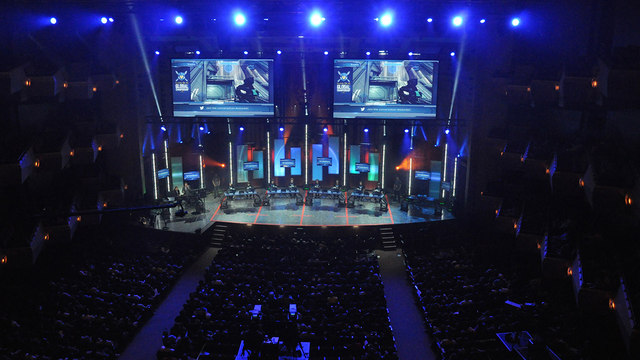
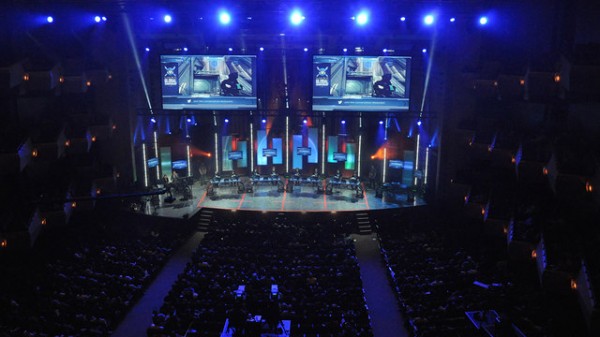
This weekend at PAX was 343 Industries’ Halo 4 Global Championships. This was the first time 343 had put on an event at this scale, and the largest developer-funded competitive tournament the decorated Halo series has ever seen. More than $500,000 was given away over the course of the championships, and Seattle’s Benayora Hall was packed with spectators for the finals.

GameSpot spoke with Frank O’Connor, Franchise Development Director for the Halo series at 343 Industries, about the future of competitive Halo. Discussion includes 343’s outlook and focus on the competitive Halo community, the continuation of the Halo Global Championships, and the potential for spectator mode in the next Halo title.

This is the first time you’ve hosted a Championship event. Why do this now…what is your intention?

From a very high level, it’s just a good way to continue to sustain the game in the first half of its lifespan. As you well know, we’ve always had a competitive community, and a fairly gregarious and active one. I think one of the issues about that is, it tends to be Team Slayer, Pros only. We wanted to really provide the broader player base with a way to enter that had some meaning. And at the same time, maybe get them interested in the higher-end competitive scene. The basic premise being that anybody can enter, and that anybody has a shot at winning something. And of course they’re going to watch the better players and the pros rise to the top here. I think the biggest difference is that this one is so broad-based, it concentrates more on individual play rather than team play. It’s a significant hurdle for people to enter something as mainstream as this; getting a good team together [is] probably the single-hardest aspect.

Many in the competitive community were a bit put off by this tournament being Free For All, considering there’s a 9 to 10 year history of 4v4 competitive play. Why not add 4v4 to the tournament? Why was the decision made to strictly do FFA and 1v1?

This isn’t going to be our only tournament. I think people tend to think of tournaments as annual beats where you get one big event, and certainly the next thing we’re going to do is obviously looking at teams. This was a way to get people who are out for the summer break, or maybe not even paying attention to this kind of thing, an access point to get them interested so that when we do stuff later on, maybe even later on this year, then we can have them be interested in an idea of competitive play period. As you know, the competitive community, while it’s big as an idea, a concept, and a population, on a per-game basis, pro teams and good teams represent a fairly small fraction of the overall user base. We’re trying to give a method of entry, an on-ramp on being interested in the competitive community to all of our players so that no one is being left out of this. From what we’ve seen in terms of feedback, is that even team players are really interested to see how some of their better players do individually in this kind of format. It throws people’s habits and expectations a little bit.

We’re trying to make this more accessible, more widely available to everybody to enter. FFA was the first gametype you look at; the challenge with teams is that you have to get three extra players, which I think is no small feat. FFA allows anyone to just jump in. Everyone here is well aware that team play is where the really high-end competitive play is going to happen, and this is a single tournament, and you can think about the future as a place to see more traditional team-based modes. With this, we’ll have introduced many players who don’t really care about the competitive scene, and then they’ll have way more interest next time around in doing something more strategic.

In the last two years we’ve seen developers Riot and Blizzard launch their own season-based events, the League Championship Series and World Championship Series, and Valve has an International event for Dota 2. How do you see this type of tournament growing? Where do you want to position yourselves on this event for the future?

We don’t have any specific announcements for the next year or what that looks like, but we’re basically internally building plans for how to keep this competitive activity going. I wish we could talk more, but we have partners and plans being built. I think also in the wake of some of the stuff we’re adding with the Champions bundle, and you think about the new mode Ricochet, it’s actually something we’d like to get teams interested in as well. We’ll be looking at how we use the new content, how do we use a newly sort-of engaged competitive audience, and what’s the right thing to do for them. We may not even have to wait till next year. This is a game we intend to sustain and promote for the foreseeable future.
Halo1_60258_640screen

Do 343 have a preliminary idea of where they want to take this, for example paying players salaries and holding control, or letting the community dictate what will happen?

I think it’s always, especially when you’re talking about emergent competitive activity, it’s always better to let the community take some lead in defining what game modes that they’re interested in, and defining what kind of tournament framework works best for them. This one is interesting in that it’s a way to get people who ordinarily don’t pay much attention to the scene, to actually get them paying attention, and that it’s an enjoyable thing to watch. Just get them into watching these streams and getting into it as a sport, and then hopefully sweep some of those people up as we do more and more tournament engagement in the future.

Virgin Gaming was announced to be the partner to run this year’s Championship. Major League Gaming began with Halo, and was synonymous with the Halo community for a very long time. Some are surprised that MLG was not chosen to be running the event. Could you explain why MLG was not involved in this, and why Virgin Gaming was chosen?

We as Halo don’t have an exclusive arrangement with Virgin; this is the tournament that we’re running right now. The platform Xbox has a relationship with Virgin, and so obviously it made sense for us to partner with those guys since they were building tech and structure around Xbox. As for MLG, MLG always used Halo as the game they chose, so [we] let them use it free of charge and they build tournaments around it. I think as they’ve grown, they’ve become obviously a much more successful pro-oriented league. I’d love to work with MLG again in the future, and there’s nothing actually preventing that. It’s more about what they’re interested in, what they want to get out of it. We worked with them for the launch of Halo 4 and it was really fun. We’d be happy to work with them again in the future.

Why did you decide in the end to go with Virgin as opposed to running it all yourself?

The honest answer is that Virgin scales better than we do and they know what they’re doing. Whereas we know the game inside out, and we know the basics of tournament structure, but we have a lot of other things on our plate including a next-gen game. So working with a partner who can help share the burden of that work and provide us expertise that we don’t necessarily have–which goes both ways–always makes sense.

One of the in-game features that’s pushed eSports and competitive gaming the most over the years has been Spectator Mode. This is a feature that’s absent from Halo, and has been requested by the community quite often. Why hasn’t this been implemented?

We take that aspect of the game tech very seriously. The honest answer is that when you’re building a game, you have finite resources, finite people; finite time more importantly. Sometimes something’s gotta give. Spectator mode–a true spectator mode–is something that we took very seriously in development. Work continues to go ahead on several aspects of the game in terms of competitive play, but we just didn’t have the time or resources to do everything that we wanted to do. Now that said, we’re a fully formed team now. We understand our capabilities and scale of our operation a lot better than we did when we first formed to take over the Halo franchise. Competitive play, spectator mode, any kind of video-based or tournament-based activity is something we’re taking very seriously for the future. Being careful not to promise anything, you can take it for granted that something we’d have loved to put in last time, should be applied to what we want to do for the next game in the Halo series.

The Halo engine is built on years and years and years of legacy stuff, and it’s frankly not all that easy to make significant changes to it. We’ve done it in the past, but it’s a tremendous amount of work, and in some ways the effort and invention that we want to apply to that type of code and features, is probably better spent forward-facing. It’s not to say it will never happen, but bluntly speaking we should be spending our resources for the future and not for the past. I wish it was in there.

Something like spectator mode, that just wasn’t feasible to do with current technology, what types of features, focused on competitive and eSports, have you been thinking for the next Halo?

I’m not in a position to talk about future features outside of a purely holistic perspective, and it’s something we take very seriously. We’re building both our staff and our experience and knowledge in that realm, and you should expect our support for the competitive community and the competitive scene will improve for the future.

The Halo franchise has such a rich competitive history throughout the years at Bungie up until now. eSports and competitive gaming has grown so much in just the last few years. How does 343 view this industry in its current state, especially with a game like Halo?

I think it’s a combination of both ends of the spectrum. I think we want to make the multiplayer and the competitive game more accessible to people. At the same time, we want to take the core community much more seriously. Halo is lucky in a way that those things don’t necessarily conflict with each other. We’re able to create a vision and a version of the game on the far-end of the skill spectrum for pro players that works beautifully. If you watch it in a tournament when it’s being properly narrated, it’s a very elegant and challenging experience.

There’s a lot of first person shooters where it’s like ‘bang, you’re dead’ and then there’s no exciting-looking engagement. I think that can be very difficult for players at the lower-end of the skill range in those games. Halo on the other hand, I think anybody can watch an engagement by high-end players, and understand what the skill they’re observing is, and see fairly exciting tense gameplay. I like watching competitive Halo more than a lot of other games.

To be honest, I watch something like StarCraft, and I can tell something awesome is happening, but I can’t necessarily understand at a glance what’s happening, and I think Halo is a little bit more like a fighting game in that regard. It’s very watchable. We’ll be thinking about that in the future too. We’ll definitely always want to support the games’ tradition of gameplay systems and playlists from normal to high-skilled players.

Beyond the gameplay itself, does 343 and Microsoft see the eSports industry with more importance than it used to?

I think we as a studio [have] a responsibility to sustain the game and keep its heart beating very seriously, and that’s going to continue all the way up until the launch of our next game and beyond that. The 360 is going to be around for a long time and we want to make sure we’re going to be supporting it properly.

HFFL: One thing Frank seems to keep deflecting is the importance or lack there of, of eSports in relation to Halo. He keeps talking about the future of Halo, the next game and so on without giving specific details. Understandably, he can’t on certain points. However, I think it would be safe enough to say if 343 is planning on getting more into the eSports side of things or not. It would certainly calm the pro community if Frank came right and said as much.

Reading back through the interview, there at least seems to be enough to extrapolate that pro-gaming is on 343’s mind. Whether they take that to task and deliver something on it beyond the Halo 4 Global Championship is something we’ll all have to patiently wait on.

-Sal
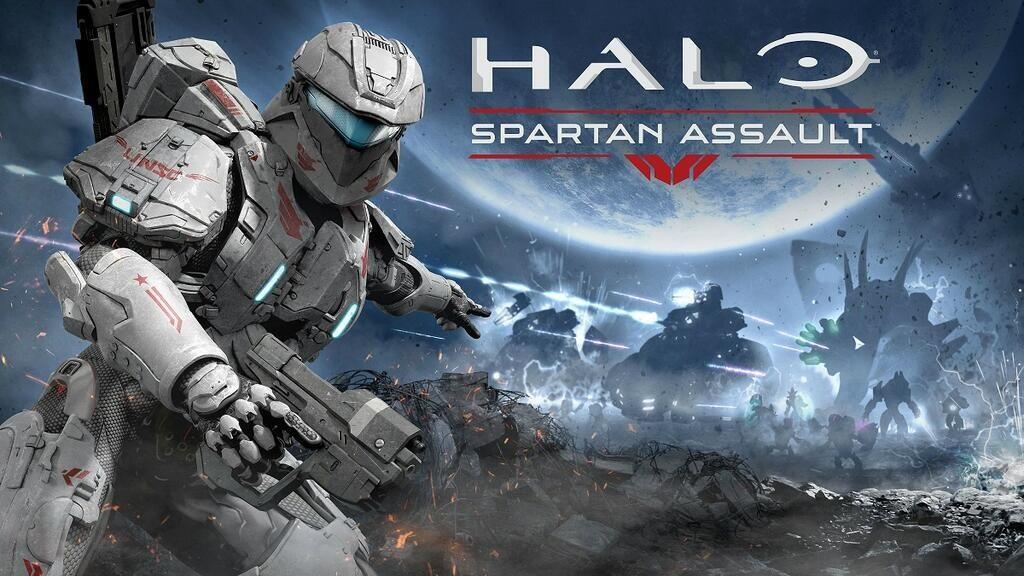
Insider Q&A: Halo Spartan Assault’s Dan Ayoub

Spartan Assault lead-in graphic

Dan Ayoub, Halo 4’s executive producer answers some questions about Halo Spartan Assault including the decision to be exclusive to Windows 8 devices.

http://www.insidemobileapps.com/2013/08/29/insider-qa-halos-dan-ayoub/

HFFL: Now while I can appreciate wanting to entice people to buy Windows 8 devices with Halo, I still STRONGLY disagree with it not coming to XBOX Live Arcade. I hope we get it on the XBOX 360 by the end of the year. I’d gladly pay $15 for it!!!

-Sal

HFFL Exclusive Interview with Toxik Nate, RTX finalist for the Halo 4 Global Championship.

Toxik Nate was the break-out surprise at the Halo 4 Global Championship qualifier at RTX. In part due to his being a non-pro and playing so well against them.
I contacted Nate right after RTX to see if he’d be interested in doing an interview with HFFL. He agreed and here it is. If you’re not familiar with Nate, he was one of only SIX to advance to the finals of the Halo 4 Global Championship, RTX Qualifier of 696 contestants. I think we’re about to hear even more about him in the future, especially if he performs well at the Finals in Seattle during PAX.

Toxik Nate Symbol

HFFL: Hello Nate, thanks for agreeing to do this interview with me.
Toxik Nate (Nate): No problem Sal, just call me Nate.

HFFL: You made quite a showing at the RTX Qualifier for the Halo 4 Global Championship. Did you think you’d place so high, knowing there would be several pros playing as well?
Nate: I knew that several pros were attending, There was no doubting the skill of my competitors, so I did not doubt myself.

HFFL: Tell us what it was like to play in the tournament at RTX. Could you feel the excitement in the air?
Nate: RTX Austin had a HUGE turnout this was my first time at Rooster Teeth. So much cosplay it was like every video game/movie character came out to PARTY. I had a lot of fun talking with Master Chief John 117 himself. He told me the ending of the Halo series beyond H4 and it is truly amazing. (HFFL: LOL) As I entered the open FFA I knew that this was an important time to play my game.

HFFL: Were you nervous? If so, what did you do to overcome that nervousness? Any pre-game warm-ups, rituals?
Nate: Yes, I only got nervous before the finals on main stage. As for pregame rituals I often listen to two of my favorite bands, The Deftones and TOOL, before I play and sometimes while I’m playing. During the line up for the mainstage finals I can remember the song SCHISM by TOOL was playing over the showroom speakers. Hearing that song was good for me that’s one of the songs I blast before I start gaming.

HFFL: Upon your completion of the tournament at RTX, what were you feeling when you knew you had made it through?
Nate: When the tournament was over I was feeling good and was thankful for my placing. I enjoyed post game sportsmanship as every finalist congratulated one another.

HFFL: Do you have any tips for the rest of us who will be participating in the online portion of the contest?
Nate: For the online portion players should pay close attention to the host of the game. This is the GLOBAL CHAMPIONSHIP so expect fans of Halo all around the world to compete. If your trying to qualify and you live in the states, getting caught on a foreign HOST makes it harder to play. Try aiming your rifle through 3000 miles of internet traffic.

HFFL: Should you win or place high in the finals at Seattle, would you consider going pro if given the opportunity?
Nate: If I place well in Seattle, I will consider playing professionally.

HFFL: What about Halo made you a fan in the first place?
Nate: Halo multiplayer is a lot of fun. Master Chief is an awesome main character.

HFFL: Which game in the Halo franchise is your favorite?
Nate: Halo 2

HFFL: What is your favorite Multiplayer game type and why?
Nate: FFA. Chaos, kill stealing, and competition.

HFFL: Favorite Map and why?
Nate: Halo 2’s Midship. PARTY AT PINK 2!

HFFL: Favorite Weapon from any of the Halo games and why?
Nate: My favorite weapon has always been the battle rifle. As you become more precise with your shots you will see its the best weapon.

HFFL: What do you think about the changes 343 have and continue to make to Halo?
Nate: 343 Industries has improved the game play of Halo 4 with the weapons tuning update. Its nice to see the developers listen to community feedback helping to bring a better player experience to Halo 4.

HFFL: Thanks, Nate, for your time and willingness to answer these questions.
Nate: Sure, no problem.

You can find Nate at his twitter account:  twitter@toxiknate

If you’re like me, you want to see Nate win. He’s the underdog to be sure. Being a non-pro, he’s got the odds stacked against him. Still, I think it would be GREAT for Halo if a non-pro won it all at the finals in Seattle. It would show that there is indeed a chance for ANYONE to win this, not just those that play Halo professionally.

-Sal

An EXCLUSIVE Interview with April Orenski herself, Enisha Brewster.

You know her from Forward Unto Dawn, the Halo miniseries that premiered in October, 2012. She played the leader and senior cadet of Hastati squad, April Orenski. It is my pleasure to bring you a HaloFanForLife.com exclusive interview with Enisha Brewster.
(If you represent another website, please only link back to this article, do not copy/paste in whole or part. Professional courtesy, please. This is my exclusive.)

And now, on with the interview:

Enisha Brewster headshotHFFL: Hello Enisha, thanks for agreeing to do this interview with me.
Enisha Brewster (EB): My pleasure.

HFFL: According to your IMDB profile, you’ve been acting for 3-4 years now. Is that the case?
EB: I’ve been acting since I was 10, but I began my film and television career just 3 years ago.

HFFL: Is there anyone in particular that motivated you to go into acting?
EB: The first person to put a script into my hands was a sweet woman named Reba Kendrid in Houston, Texas. I was hooked from that day forward. A couple peers in college motivated me to pursue a career in acting well before I’d made that decision for myself. And a casting director in Atlanta encouraged me to consider a career in TV and film before I’d even given it a thought. I am ever grateful to each of them.

HFFL: Who in your life, famous or not, is an inspiration to you, and why?
EB: I am inspired by humanitarians like Kerry Washington, and great women like Phylicia Rashad, and great artists like Geoffrey Wright. My family inspire me every day of my life. 
HFFL: Family can definitely inspire!

HFFL: You played “April Orenski” in the Forward Unto Dawn mini-series. Have you done mini-series in the past? If so, which ones? Were any sci-fi related?
EB: Forward Unto Dawn was my first mini-series and my first sci-fi project ever.

HFFL: Forward Unto Dawn was shot in Canada. Was that your first time acting in a production outside of the United States?
EB: Yes. We shot Forward Unto Dawn in Vancouver, a lovely city with even lovelier people.

HFFL: With Forward Unto Dawn being a hit, are you aware of your now lifelong association with Halo? Would you like to reprise your role as Orenski if offered that opportunity?
EB: That never ceases to excite me! I would be happy to reprise my role as April Orenski given the opportunity!

HFFL: Where/What would you like to see Orenski become?
EB: A loaded question 🙂 I have some ideas, but I’m going to defer to the creative geniuses at Microsoft on this one.
HFFL: I have some ideas as well. Admiral Orenski!

HFFL: You recently were nominated for an EMMY for your role as Orenski. How and when did you find this out and what was your reaction? (By the way, congrats and I truly hope you win!)
EB: The official nominations will be announced on July 18th, 2013. It would be a huge honor to be nominated. At this stage I have been submitted to be considered for an Emmy Nomination–which itself is a huge deal!

HFFL: Are you at all like Orenski? If so, how, and if not, what separates you from her?
EB: I think April Orenski and I both have a strong sense of duty, commitment, and responsibility to the things and people we hold in high regard, but April is far more stern and way less empathetic then I am. She is military. As much of a tomboy as I once was (and still am in some sense), I love a little beauty, a little glitz, a touch of glam every once in a while.

HFFL: Are/Were you a fan of Halo? Did you know of Halo before your work on FUD?
EB: Honestly, I wasn’t very familiar with Halo before being cast. I had to get the scoop from my brothers. I didn’t start to understand how huge an opportunity and franchise Halo is until I heard their excitement. 

HFFL: Are you a Gamer? If so, have you played any of the Halo games? Before your work on FUD?
EB: No, I can’t say that I am a gamer. But I have a sneaking suspicion that will change very soon.
HFFL: Well, I hope you do get into gaming and feel free to add me as a friend on XBOX when you do. My Gamertag is: HaloFanForLife1

HFFL: Did you have any surreal moments on the set? If so, please expound upon this. For example, seeing Master Chief for the first time.
EB: Seeing MC for the first time was indeed a surreal moment! Daniel Cudmore, who embodies him in Forward Unto Dawn, is himself a tall man with a great presence. Seeing Daniel in full armor as Master Chief for the first time was like meeting a superhero. My heart started racing and my eyes must have been a mile wide.

HFFL: What projects do you have up and coming?
EB: I can be seen in the 12th and 13th episode of Perception this season, back in uniform and barking orders! The episodes air in September on TNT.

HFFL: Thanks again for your time Enisha. It continues to be my honor to talk with you. I wish you all the best in your future acting career. Should you win the EMMY, don’t forget we little folk who are pulling for you!
EB: Thank you, Sal!!

You can find news of Enisha at her official website: enishabrewster.com
As well you can follow her on twitter at: @EnishaBrewster

-Sal

Back from New York Comicon!

Okay folks I have LOTS to discuss. I’ve got to write it all up. Here’s what you can expect over the course of the next two days:

• My “diary” of events of the trip. This will be a series of articles that will be more than just Halo related. It hopefully will read more like a story of my trip.
• Summary of New York Comicon. Think of this as the “Cliff Notes” version of above that pertains to the Con itself with more Halo highlights.
• Halo specific related convention news.
• A VERY Special Halo LAN/after party with pics and some great news about Halo 4 and Halo Mega Bloks.
• Thank you articles for those who helped me along the way during the con.
• Cosplay people! (Pics)

Beyond the convention stuff, I’m also going to squeeze in a multipart review of Forward Unto Dawn episode two, much like I did for the first episode. To follow in a day or two will be the unofficial Graphic Novel for episode two as well.

As I said, LOTS to do, so be patient please and I’ll get to blogging all this stuff momentarily.

-Sal